Showing posts with label eden. Show all posts

Monday, November 5, 2018

C is for Community

CSA members sharing a meal at the farm
Community. 

It seems this concept feels very much different now, than it did from long out of the past. Perhaps because we are living in a different kind of society than when we grew up. At least, I think I can say that for those of us from the Baby Boomer and Gen X generations. We didn't grow up with 6' wood fences, they were chain link - if we had them at all. We all walked to school together, our parents had dinner parties and everyone on your block and in your homeroom class or grade was your community. Now, with charter schools and driving kids there instead of flocking there in packs down the sidewalk, living at a breakneck speed to get to as many out of the home activities as humanly possible, as opposed to playing hide and seek catching lightening bugs till mom called, and we're entering and leaving through the garage so, many people don't even know their neighbors, much less consider them part of their community. Many of our neighborhoods feel fractured, unconnected.

Eden's Organic Community Garden Ground Breaking Crew
Maybe that's why the philosophy of CSA farming appealed to me so much when I first discovered it in 2007. I had read the book, virtually a how-to handbook on CSA, called Sharing the Harvest, (if you happen to buy it, please sign on through Amazon smile and choose TOFGA to support TX farmers.)

Not only did this book help me gain much respect and admiration for farmers, none of whom I really knew personally at that time, but its concept of this CSA format of farming, reminded me of something else on which I couldn't quite put my finger. Not until I decided to break ground; first on the community garden in my front yard and then to start an actual commercial farm, growing for my community.

Ground, er, manure, breaking crew for Eden's Garden CSA Farm
After all of these years of growing for many of the same families, I think I get it now. It was the growing familiar with the people I fed; the forming of a community within what I was doing that fed the human need for connection. Even introvert farmer types need people around sometimes. 

When I worked part time in my hometown of Franklin Park up in IL, at the local camera store with a small crew of 3 employees, just about anyone who took photos back then, brought their film there for developing. We got to see kids' parties, Halloween, vacations and everything in-between. Many came in at the holidays to get their kids a new camera and pass on the tradition.We had waited in the same line for lunch at the local hot dog stand, bought our groceries at the same family owned grocery store, and banked at the same local state bank. It was small town living of the 80's. Our small town was a big community where everyone knew each other somehow.

Working corporate, where I went after graduation, you sort of lose that environment. Other than the community that might form within a department. But with all of the shuffling of personnel, it seemed hard to really get the same sense of community we'd had with a small staff and loyal group of customers at a small retail store, much less my old neighborhood. Plus, there were often feelings of competition among employees in the big corporate offices where I worked. It rarely felt genuine.

The Original Eden's Organic Garden Center
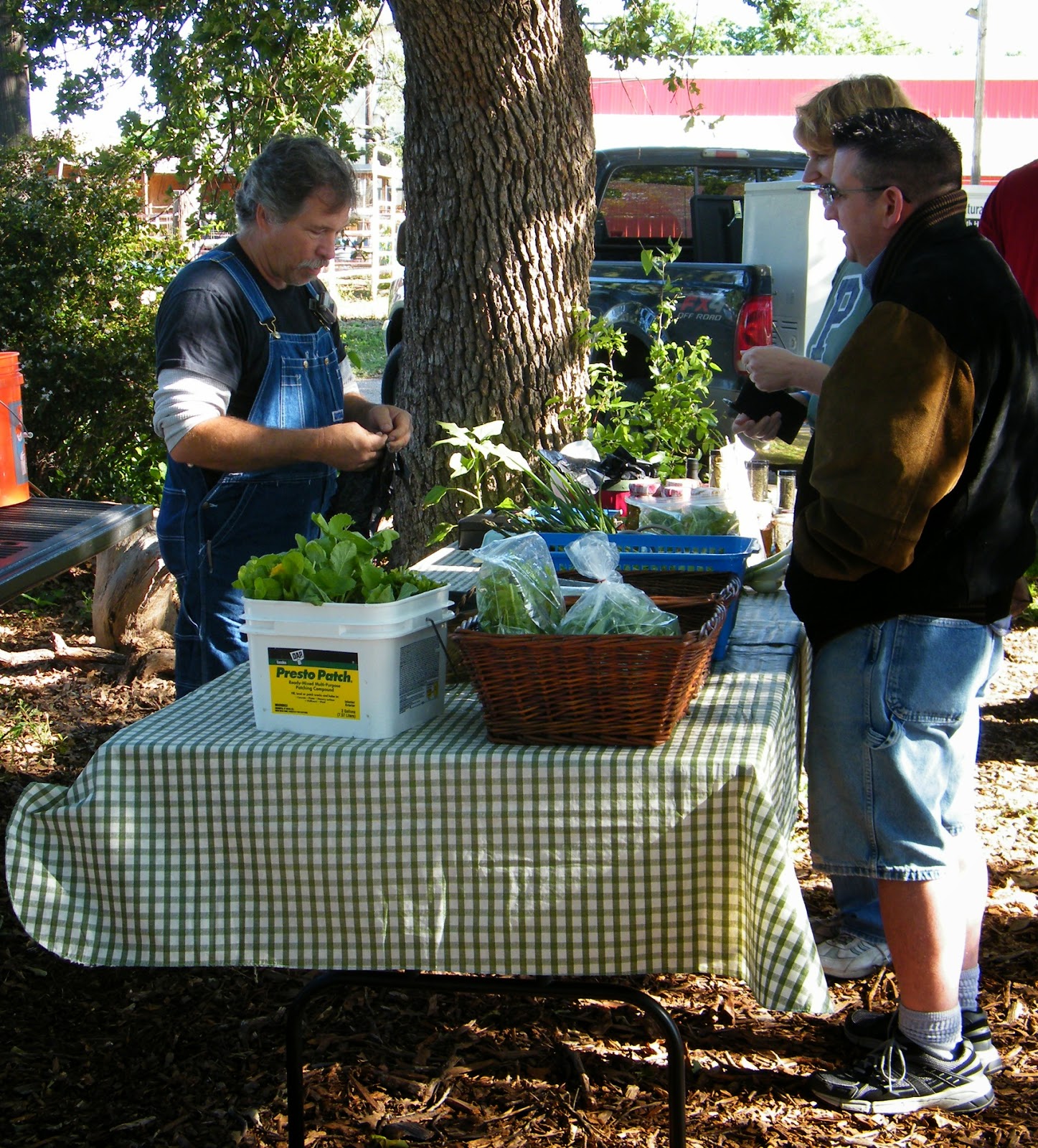
So when I decided to break out and start my garden shop down here in Dallas, I was eager to re-create that feeling of knowing your customers and making them feel at home. Even if I am terrible with remembering names, I wanted to remember the people and what they liked to grow and help them garden safely.

When the garden center didn't make the move well to where I now make it my adult "hometown",  south of downtown Dallas in Balch Springs, I started a local market of organic local farmers and ranchers in order to hopefully create a sense of community around something I thought surely people everywhere would have a common value for – food.
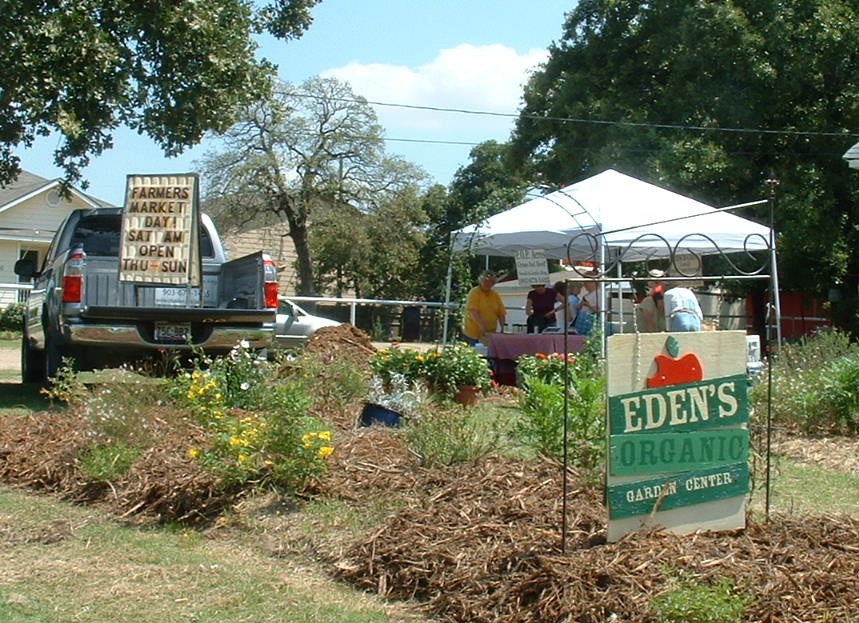
First Market Day at the Relocated Garden Center
Homegrown, food raised locally, using sustainable and safe methods by someone they could meet, get to know and trust. I thought I'd create a community of like-minded people who wanted to have peace of mind about their food and get to see who raised it.
Early years work share members help plant crops

Little did I know there were way more eaters than organic farmers. So, I rolled up my sleeves to grow some, hoping maybe some would even help plant or harvest that food. They did!

Making REAL Food Accessible for all


And as a result of that support, a small, urban farm is around for the whole community to share from and from which kids and adults alike, can learn things they don't generally teach in school. Since 2008 - we've come a long way, baby!


That's what CSA means to me, and hopefully to all of my members.


We're not a “subscription” to a farm box program. Some folks belong to huge CSA's, like the ones out in CA, where they never even see the farmer, or the staff of farm workers, much less go to the farm to connect with the land. It's a CSA in that they are directly paying the farm, as opposed to a 3rd party middleman, and often it's a farmer's choice "share", meaning they're getting a variety based on the harvest. But from what I understand, more than ever these days, in many CSA programs, there's usually no risk shared in this transaction. And shared risk is one of the key elements of the CSA concept! It's what helps keep small farmers from going under.


Many customers are paying week to week, as they get their produce. So if there's an early freeze, drought, fire, flood and there's not any share to pick up, or not the selection of what they want to order, there's not a payment to the farm. And the farmer, in the throes of a disaster, is left to punt alone.

Other farmers will go into debt buying produce from other sources to fulfill their customers' baskets in lean times out of fear they'll lose their "subscribers" if they don't get what they feel should be coming. As if there's a truck re-stocking the flooded rows of the farmer's fields.

That's not much of a relationship. It's missing the C - community. They don't really have their farmer's back if they are going to bail on her during tough times.

Gratefully I feel, and have felt for many years, that my members - have my back. And that's a great feeling.

And CSA's are way more than some door to door service that drops off a box of chopped up veggies and plastic pouches of dried herbs that were obtained from who knows where. Often funded by venture capital, once the infusion of cash dries up, commonly so do these businesses that have a hard time operating on the razor thin profit that goes along with selling produce. Even produce prepared to that extent. There's hardly enough profit for the small farmer to make a good living selling produce, much less to include a middle man who's paying a chef to cut and assemble your meal!

Yet many a farmer has lost a lot of customers to the convenience factor. And some of those farms end up going into debt trying to compete with door to door delivery models, folding up or taking on extra off-farm jobs to support their addiction of farming. It's a hard thing to give up if it's in your blood.

ENTER THE TRADITIONAL CSA
Work share and volunteers often help plant and harvest


CSA Members Picking up Shares at the Farm
This little guy just turned NINE!
My members pledge to support their farmer with an annual subscription. We have a variety of payment options, but they're always made in advance of the season to come, giving the farm its seed money and keeping the bills paid. No one gets a cash refund if an ice storm takes out our winter crops or a drought means the watermelons are small and pithy that summer. But chances are, I was begging people to take more of something else that enjoyed a bumper crop season. Rarely is there nothing to harvest unless fields are under water or frozen. The farmer of a CSA farm works hard to bring in a harvest for her members as many weeks as the weather allows in a given area. Many farms have a set amount of weeks per season. Some farm year round, like I do.

CSA members at Eden's receive a share of in-season vegetables, fruits and herbs that I've hand selected for them just days before they come to get them. (some pick up at the farm, some at various in-town locations).  I try to familiarize myself with what many of them like or don't like, or are allergic to, and I do my best to grow accordingly. And I offer "pick your own" on "off" weeks to our members.

I've watched member couples wed, (here on the farm), kids born and grow up and some even get big enough to leave home and come back to the farm to reconnect.

It's been 10 years now since I broke ground, and a lot happens in a family in that amount of time! And likewise, many of my members have seen me and this farm from the ground up, too.
CSA Member Joan Firra - a founding farm member, picks up at the farm faithfully
Most have been members for 8 years or more. That's a loyal bunch of folks!

Members picking up "market style" at a remote site in town
Much is written about those door to door delivery services and I see big farms crossing over into other regions, projecting the same small, local farm connection as the actual local small farmers living in the areas they serve. But it seems to me that's just not the same thing at all - for either party.

I know that this farmer loves being able to shake the hand of the family who eats what she grows. And as much, I like getting to shake the hand of the rancher who raises the cattle for the beef I eat and the milk I drink. And I even have the privilege of knowing who catches my fish!

My members know they can trust the woman who grows produce for them because they've come to know me as a person, not just a concept or a picture in a blog they read.

I am grateful for the people who find it important to know where they get their produce, and then trust me to be that person.

Preparing one of the fields for planting
I never imagined making a living as a small farmer. Even though I made my way from corporate and office work to horticulture, this is a world away from even that.

My job is more than just growing vegetables, though. I try to educate people I meet about how important it is for them to get at least some of their diet from nutrient dense foods grown in season from their local area sustainable farmer.  It's not only good for their health, the environment, and the farmer, but it's good for their local economy as well. I know many of my local hardware store employees by sight, and they recognize me coming, too. We return those dollars back into our communities. And if we get busy and successful enough, we can hire local help.

Along the way my CSA members and market customers learn about new foods, and new things about familiar ones, and I always try to be as transparent with them about the process as I can. Maybe too transparent sometimes. But telling the chickens of the woes of the day, or yelling at the invisible cotton tail rabbit that decimated an entire row of cauliflower and collards transplants, doesn't have the same effect as sharing it all with someone who can say something besides “cluck cluck” in response. I need to tell my community! And then we talk about recipes for Hasenpfeffer! LOL 
(*no cottontails have been harmed by humans on this farm. We leave it up to the natural cycle of Nature.)

So if you're looking for a connection to where your food comes from; being able to shake the hand that feeds you and hear all of the details about how it got from seed to your kitchen, I hope you'll consider joining our little CSA farm.

We have openings for our upcoming 2019 farm year - spring, summer, fall and winter seasons. If you reserve a share now with $100 monthly payments, Nov., Dec. and Jan., you'll be all set for the spring distributions when they begin. Continue those monthly installments of $100 through April, and you're on board for summer shares of tomatoes, cucumbers, onions, etc. Keep it coming through July, and you'll receive fall shares, and the October installment pays you through for winter crops. A full year with a farm is a great way to appreciate your region's foods like never before. And the flavor of freshly picked veggies and fruits, is unsurpassed by anything you find at the big box supermarket - organic or not. Mass production is not intended for flavor - it's intended for mass distribution. 

Right now we're harvesting fall crops, and planting winter crops. It's a never-ending cycle in North Texas. At least it is on this farm. I don't have the luxury of taking the summer or winter off. The animals have to eat, and the garden grows, or the bills don't get paid. Some day I'll afford a paid staff. I hope!

If you are really interested in learning how it all works, or you have some helpful special skills, or are maybe a little down on cash; please ask me about work-shares. Folks without any gardening background have come to love gardening today, and those who came with an interest, have gone on to homestead and even market farm themselves.

We have a sliding scale option for Lone Star SNAP customers, too; because I think all of us deserve to eat as well as possible. Eating healthy is the key to being healthy – and that should not be out of reach for anyone who is willing to strive for it.

Most of DFW is full of fast food and processed food. Most of this town is full of fast food and processed food.


Think of Eden's as an oasis of REAL FOOD, GROWN with INTEGRITY!

Come - out to the oasis! Come out to Eden's Garden CSA Farm.

We're just up the road, down on the farm.

15 mins southeast of downtown Dallas, Lakewood, and next door to Mesquite, Seagoville, and Pleasant Grove. Join our CSA or shop during Market Day, each 1st, 3rd or 5th Saturday morning.

Balch Springs -  It's All Here!

 Eat Your Food - Naturally!

Farmer Marie

Tuesday, December 23, 2014

Back to the Ground


Before I started farming, I used to write a weekly column about home gardening sprinkled with some tips about healthy eating. With more and more of you looking to grow home gardens and eat locally, I thought I'd revive some of those tips. Plus, I can now add new information that I've gleaned from colleagues or learned as I've been growing food full time for the past 7 years. Granted, I grow on a much larger scale than most of you will likely want to tackle. But many of the tips and some of the techniques, can be replicated in any size garden.

And with all of the talk these days about the importance of eating organic, fresh foods, well, it doesn’t get any more fresh than picked from your own back yard where you know for a fact what you used, and what you didn't use, in the garden. So if you want to eat healthy, fresh and organically this year, you should know that it doesn’t have to be expensive or cumbersome. 

Awhile back I shared a link to a blog by a mother who planned out how to budget for her family on a food stamp allowance and still eat an organic, healthy diet all week long.  Here is that link again. http://www.rebeccablood.net/thriftyo/2007/04/the_organic_thrifty_food_plan_1.html   I think a lot of it is still relevant. It all comes down to a little bit of planning and a little tweaking of our attitude regarding the way we think about eating and lifestyle priorities.  

I have had many conversations with folks about how hard they think it is to eat a healthy, home-cooked diet rich in vitamins and fresh foods.  I’ve been told I’m nuts or unrealistic. Well, I'm not perfect at it either, but I know it can be done. I keep reading about people who have done, or are doing it.

Plus, I hear all of the time people say that they are just too busy to cook. Too busy to shop. Well, you know what? I'm busy, too. I have 14 acres and lots of animals to take care of every day. Honestly, I don't always feel like cooking when I come in after a 12-14 hour day in the field - any more than a single parent does after pulling a double shift and dragging kids to several different soccer fields or home from day care centers. 

So, in order for all of us to do this better, we need to plan. I'll invite folks that I know to share cooking tips, including pre-making dishes for later in the week, and using leftovers so there's less waste, too. These can help keep the output of both money and time spent, more efficient.


I think part of the problem, too, is some folks today have lost touch with their roots when it comes to eating healthy diets of real food. And believing too much of the marketing they see in ads. Trust me, just because it's sold on the supermarket shelf, of any grocery store, doesn't mean it's all that great for you.

Most of us who grew up in the 60’s and 70’s, ate much healthier, real foods when we were younger than many of today's kids do. And, I daresay, almost all of our grandparents ate mostly meals made from scratch, because most of the aisles filled with ready made meals found in today’s stores, didn’t exist 50 years ago. Come to think of it, as a kid, I could make it through our neighborhood grocery store in about 10 minutes walking up and down every single aisle. All 8 of them!

So what did they eat in the “old days”?  Simple – they ate real food.  And most, in the summer anyway, they grew a lot of it themselves. I remember my mom growing in our tiny little postage stamp, mostly concrete back yard. Corn, tomatoes, cucumbers, beans, peas, and who knows what else she grew back there.She planted a garden every summer in my mid-west home town next door to Chicago. 
It seems we have gotten used to popping “pseudo foods” into a microwave or driving through the fast food lane, or skipping meals altogether, because we keep our (or our kids'), schedules so full we don't have time to prepare and eat food at home the way it used to be done. 

Eating is not simply about stopping your stomach from growling or quenching a craving for fat or salt. It is meant to fuel your organs with vital nutrients so they can have a better chance at working properly. It's to really satisfy your hunger so you don’t over-eat. And, it can help restore any potential damage done, (you know, from when you had that streak of eating an entire box of sticky buns for breakfast and some kind of mystery food in a box for dinner), so you don’t become sickly. What’s the saying about food being our medicine? Or an ounce of prevention…. You get the idea.

One great cost-cutting way to get your daily dose of healthy, real food, is still by growing some of it like people used to do – right outside your back door - or front door, or both!  Even if you just start with container gardens for lack of space, there are many things you can grow at home that are pretty easy. 

What if we all learned to grow some of our own food like our parents and grandparents used to do, and passed that skill on to someone else?

There really isn’t that much to it on a small, home garden scale and it is very, very inexpensive, especially if you start from seeds and use your own soil and make a bit of compost at home. Even if you're on a super tight budget and receive assistance; did you know that you can use those funds to purchase plant starts and seeds for vegetables, fruits and edible herbs at places that accept SNAP? And what you traded one or two of those extra-curricular activities you hurry off to 3 or 4 times every week, usually at dinner time, became community gardening or joining a garden or cooking club?  Just food for thought.... Think of the gas money you could save, too!

Once the initial prep work is done on a new garden plot, there’s just a little bit of upkeep a few times a week, and you’ll be on your way to fresh salads, fresh steamed or raw veggies and other delicious foods.  As a side benefit, you’ll get some good exercise and fresh air, too.  It’s also a great hobby for kids to do with you, so they can see what vegetables look like as they're growing, and learn where they really come from – before they show up in cellophane wrapped containers in the store.  And hey, if you don't have any around, see about including a neighbor's kids. You can usually rent a kid pretty cheap for an hour or two.
 
Teach them that yes, we actually plant and dig French fries, out of the ground first. No, those nubby little packaged school lunch carrots don’t grow on trees - or usually that small. Peas can actually be eaten raw, they’re not hard to start with - those are frozen. I often hear many parents say they have never seen their kids eat so many vegetables before they started to help grow a family plot.  Kids can be a lot of fun in the garden. Plus, they don't usually mind picking bugs off of plants and that's one of the ways we control pests. I keep a few containers around for our CSA members' kids to catch grasshoppers and caterpillars to feed to the chickens. Most of them love it!

So, let’s get started this year! Next time I’ll visit with you about how to select a site for your garden, what you can do right now to start preparing the soil – and guess what, it doesn’t involve digging – and the fun part; seed and plant shopping! 

Until then, start thinking about 4 or 5 things you really like to eat and could possibly grow yourself! And....

Eat Your Food - Naturally!
Marie 

Thursday, December 4, 2014

Acres USA's December Issue - The Untold Chapter


Earlier this summer I was interviewed for a story in Acres USA’s magazine, known as “The Voice of Eco-Agriculture”. Acres USA is “North America's oldest publisher on production-scale organic and sustainable farming". The magazine is available at various book stores and news stands and you can read the full article there.

The interview was about specific challenges I experience as owner of an urban farm. And writer Rita Cook notes in the magazine index tease; “…..she has overcome these challenges and continues to focus on growing in harmony with nature…” Staying focused on the end result, “….to produce fresh, healthy food for the local community.” is the best way I know of to be successful.


One of the questions I was asked, concerned any benefits there might be to owning an urban farm. There can be several, namely accessibility to the farm for consumers, which could be considered a built-in market. However, I explained it is only a potential market. As with any business, just because you build it – doesn’t always mean they’ll come; even if they can walk to it. Marketing plays an important role in consumer’s choices.


I added that along with that built-in market, came built-in competitors as well. As the popularity of local food and all things related has increased since I opened in 2007, about a dozen or so other well financed, neighborhood “farmer’s markets” and “CSA’s” have popped up all over the DFW area.


Do they have farmers who actually grow the produce being sold? Some of them. Is it clear which ones don’t? Not always. “Why is this a big deal?” you might ask. It’s a story in and of itself that I’ve touched on many times, but probably bears repeating.

I replied to that question in a part of the story that wasn’t published. With a few additional thoughts I’ve added since the interview, here’s what I said.

I’ll let you decide what the big deal might be, from the farmer or a consumer’s perspective.

Accessibility is of course one of the certain pluses. It is not only convenient for customers, but it makes deliveries of produce to the farm’s restaurant accounts less costly than for many out of town farms.

As far as the larger customer base, this has its up and down side. The extra people living in the area means the market is also desirable to many other businesses vying for the same thing. And I’m not talking about other small farms. Medium to large food buying clubs, middle man run food co-ops and out of town large farms that use their marketing dollars to tout “to your doorstep” deliveries of “local” food are all here, too.

This gives the consumers what has become a wide, yet confusing, choice of ways to eat better. However, it has also put a sort of wedge between the farmer and the consumers' plates by encouraging the old “get bigger or get out” mentality in order to be able to compete. Right in our own backyards.


I don’t think many consumers really understand that when a middle man gets involved between the farmer and the end consumer, about half of the gross profit for the farmer is lost. The one who made this food possible in the first place.

Try to think of it this way; if he, or she, gets paid 50 cents of the retail dollar for those tomatoes the customer paid $5-$6/lb; a farmer is working tirelessly to grow and protect 10 acres of the most gorgeous, delicate, hard to transport and delicious fruit around – and essentially gets paid for only 5 acres. 

I’ve recently seen several farmers stop farming because they just couldn’t afford to do it anymore. This is a sad, and scary, trend. Especially when we're talking about trying to replace the ever aging current farmer base. 

Small farmers can’t afford to donate half of their time or product any more than anyone else can. And yet, in the form of their net profits, it’s often given to a middle man who can choose to buy from any source, local or not, big or small, based on price, (read profitable - to the middleman). This is often done in order to supplement their customers' “shares” with out of town, out of season produce, just to keep a bounty in their customer’s basket. If local weather or other conditions are affecting actual North Texas local farms’ yields, this practice is a direct conflict of what the original CSA movement was meant to be about, and has confused many customers. Or at the very least, has certainly not done a very good job exposing them to the reality of farming. Which is a large part of what the whole "local food" movement is about, right?

The customer doesn't share any risk with the farmer in a food co-op or an on-line grocery ordering system where its "pay as you go". And as far as I know, neither does the food co-ops' owners.  CSA is also supposed to be about sharing the risk with the farmer - to help keep the farmer's supported, “bounty or bust”. The farmers plan, plant, cultivate and hope for the best. But committed CSA members of a farm don’t bail out if grasshoppers or an early, hard freeze ends the season unexpectedly.
Instead, these customers have developed a relationship with that farmer, their farmer, and know he or she will do their best to make it up the next season. Cash refunds are rare, as CSA funds are collected and used as "seed money" at the beginning of a season.  That's part of the concept, too. Banks aren't as forgiving of crop failures, and many urban farms sit on prime tax base properties that are under agricultural valuations. (Even if it takes many more years to achieve than it should have.)

The pressure is already great to provide our customers with the best we can grow for them, because most farmers take a lot of pride in what they do. But it’s really difficult to compete with the marketing campaigns and misuse of descriptive terms, like co-op and CSA, when even major local media coverage interchanges the words and doesn’t make clear the differences between the various programs. 


This difficulty is especially true if the consumers' main objective the convenience of a weekly selection of a wide variety of what they are used getting from the supermarket, dropped off at their doorstep. They may not even realize that the small farm touted when they joined, may no longer even part of their "share" because of a crop failure or had a crop that was rejected by the distributor for a few bug holes in the leaves of a crop grown organically. (Excuse me, do you want us to grow without synthetic pesticides? Then you're sometimes going to have a few holes in your cabbage leaves.)

We waste so much food in this city; food that healthy meals could be made from, and given to the people starving right here in our own back yards. People living in food deserts, where, ironically, my farm is located along the edge of. But that topic, is again another story in and of itself. One I'll try to cover another day.

But some customers are so out of touch with the differences between these middle man food delivery services and CSA's, that in the same year that Eden’s and another small local farm were named “Best CSA” in a tie by the magazine’s staff, a readers choice award in the same publication for “best farmer”, went to one such local food distribution company, instead of an actual farmer. (I didn't even notice farming as a category in this year's "best of" version. Probably just as well.)

Abraham Salum - one of my farm's first local chef supporters
There’s still seems to be a real disconnect, even though the topic of local food and being in touch with its source, has risen to new levels in the past 5 years. Locally, that is in large part thanks to the publisher of the 5 year old magazine Edible Dallas and Fort Worth, Chefs for Farmers, a number of prominent chefs, as well as the various food documentaries that made it to some of our local theaters. National Eco-conscience companies like Chipotle have sponsored local expert panels to answer questions from the audiences after these films as well as large food festivals. Educational opportunities are out there, and growing bigger. I have hope for the future.

(If you missed them at the theaters, some films really worth seeing are Fed Up, Food Inc., Cafeteria Man, GMO OMG!, GROW!, Fast Food Nation, and Fresh!, the film my farm premiered here in Balch Springs back at our periodic fund raiser BarnAid a few years ago.) 


So, really the best thing I can do to not look like a sour grape, is just tell the story of what I’m trying to do here, and rally the support of those who want to help achieve the goals I’ve set.


I try to encourage people who really want to be on the front lines of food justice and eating locally grown, clean food, to join me and pledge their support with a CSA membership or to buy as much of their family's food as they can by other farmer-direct methods. 
As Alice Waters so eloquently put it many years ago, and I paraphrase here; everyone has the right to eat good food and to make a fair living. I think that there are plenty of ways to do both, without doing so at the expense of others.
 
And I think the, successful on-line fund raiser I recently held for the farm, is perhaps a testament of the achievement of this farm’s outreach. 

But not all farmers have such prominent public voices. Being urban has also afforded me that privilege. So holding a small market here on my farm to help give fellow farmers a place to sell their wares, has become an important cornerstone for my farm's mission. 

I still host the only market in DFW that allows only food grown or produced organically, meaning, without the use of synthetic pesticides, etc., or GMO's. Certified or not, I know these farmers and producers personally, and my customers have come to know them as well. We don't need a government sticker to back up our word. We work in our own fields and eat, and serve to our families and friends, the food we produce.

Let the local growing continue, and let’s hope convenience and price doesn’t always win out over small, local and real food, grown with integrity. The more demand for transparency there is, for food grown naturally and truly grown locally, the more it will become available.

Buy direct from the grower or producer as much as you can. It's really what the big benefit of having local farms around, is all about. And get involved! There's a current movement going on to help loosen restrictions on community gardens and urban agriculture in the City of Dallas.


Now Go on and Eat Your Food - Naturally!
Farmer Marie

Wednesday, November 12, 2014

Frost Watch


Smoke, our Icelandic ewe, is glad someone finally turned off the heat.

A few weeks ago we were in the first frost “watch” mode of the season. That is, the local prognosticators were calling for an earlier than usual first killing frost that sent many folks scrambling. But it never came. At least, it never frosted here at the farm.

But with this new, much more severe sounding “polar vortex” forecasted recently, frost seemed more likely to happen and it seems everyone is calling it quits on summer crops. (Whatever happened to the much friendly phrase – “blue norther”?)

At first, they were calling for a light frost, something that would give us a temperature range of about 32°F down to 28°F. This temperature range affects the most tender of your summer garden such as beans, cucumbers, eggplants, melons, New Zealand spinach, okra, peppers, pumpkins, summer squash, corn, tomatoes, amaranth, and winter squash plants, although if the skins are hardened on the latter, a light frost won’t affect the fruit itself.

Other conditions must be present for a frost to set up on the plants when temps are hovering at 32°F, such as calm air and a clear night sky. This is also known as a “radiation frost”, and is generally what happens when we wake to “Jack Frost” on the pumpkins for the first time in the fall. Although, with the way the winds blew in with much colder temperatures, this event may well qualify as an advective frost, as occurs with a strong cold front.

A hard freeze occurs when temps are colder than 32°F for four or more hours, and temps get below 25°F. Not too many veggies appreciate these temps, although winter crops such as broccoli, Brussels sprouts, cabbage, collards, kale, kohlrabi, mustard, onions, parsley, peas , (but you may lose the blooms), radishes, spinach, turnips, leeks, and sorrel, are often “sweetened” instead of damaged by them, and don’t usually require protection. Although I’ve been known to cover seedlings if they’ve not had a chance to harden off.


"Deep swings in the weather can take out plants that would ordinarily be hardy.  But then we never experience 40 degree temperature swings in North Texas, do we?"


Somewhere in-between these two lists are the crops that can usually take a light frost, but not the hard freeze and include artichokes/cardoon, beets, carrots, cauliflower, celery, Chinese cabbage, endive, lettuce, parsnips, peas, Swiss chard, escarole, arugula, bok choy, maché, and radicchio.

While the above lists are a good rule of thumb, and should be taken into consideration when planning your garden layout, I’ve seen exceptions to all of these rules at various points, on various plants. The more mature a plant, the higher off the ground it generally is, and the more susceptible to frost it will be due to losing contact with the ground heat. Deep swings in the weather can also take out plants that would ordinarily be hardy.  But then, we never experience 40 degree temperature swings in North Texas, do we?

Many factors can affect frost.
Sometimes, an area will escape a forecasted frost if it is somewhat protected by its micro-climate such as often exists in close knit, highly cemented, urban areas. The heat of the day is held in by the buildings, parking lots, and side walks.

That’s why many times a small backyard garden isn’t affected by a light, brief drop in temps, like one in a wide open space. Like this urban farm.

Although, if you have an inner urban property that exists at the bottom of a slope, or the top of one, you may experience a frost, while a neighbor on the side of the same slope, may not.

Experience over the years on a property is the best teacher for whether or not you’re likely to see damage based on a forecast – IF that forecast ends up correct. One extra push from a strong weather system, could mean an unprotected plant may not make it if temps end up dipping just 1 or 2 extra degrees.

It’s probably not too hard to cover most small back yard gardens, so if you want to try to preserve yours, you may as well be safe, rather than sorry, and cover it up. (More tips on how to do this, below.)

Time to Prepare
As seems par for the course, we had a few very nice days ahead of the predicted cold. I like to take advantage of those days to prepare. And we did just that here at the farm. Tugging on a 100’ x 15’ piece of frost cloth with 25 mph north winds can probably be equated to trying to struggle with the parachute of, say, the Jolly Green Giant during a Minnesota winter. Not fun.

And while it was still a bit windy while I was giving the farm intern his first experience with this winter weather drill, we were pinning frost cloth down in a brisk, easterly wind with the temps near 75°F, not 35°F. The wind chill is much more pleasant at the former.

Additionally, you’ll increase your soil’s heat holding capacity by about four times, if it’s well irrigated beforehand. That’s why you’ll hear me saying to be sure to “water in” your garden, before a frost. Cornell University says it can affect the air above the soil by 5 full degrees, which is a big deal when temps are hovering near freezing over your heavy laden, late fall tomato, basil or eggplant crop!

Some folks decide it’s just not worth the trouble to try to save summer crops and let them go by way of a natural season ending frost. But often, as had been the case the first few winters I was farming, the first predicted frost comes in early to mid November, the low temps last briefly, and there is little to no damage, followed by several weeks of mild weather.

We enjoyed summer squash well after Thanksgiving, tomatoes and summer squash at Christmas and didn’t have to cut all of our basil until around New Year’s. Lately, though, winter has been hitting earlier, and harder. Time will tell if the few hours of prep time will pay off.

To Cover or Not to Cover
By now, you’ve either decided to bother or not, and I’ve covered this topic a few times in the past, but it bears repeating. Frost cloth is designed to trap heat from the ground, under the blanket, not keep cold air from touching the plant.

It’s for this reason that unless you’re stringing lights inside the cloth to keep that palm tree warm, simply tying a sheet over the top of a tall plant is not likely to do much good. And I’m not entirely sure how well doing that works, I’ve never tried it.

Unless you’re able to keep soil heat radiating up inside that blanket to protect the plant, there’s a good chance you’re wasting your time making lollipops out of trees.   

You should never use plastic directly on a plant, without first protecting it with at least a cloth sheet. Plastic conducts the cold. A hoop over low growing plants is also helpful in protecting as a heavy frost can form on the surface of your frost cloth and burn the tips of leaves it’s touching.

So, in review;
1-Decide if the temps are going to dip below freezing long enough to damage, or just to chill the air enough for a hot cocoa. If you’re not sure, plan to protect plants based on predicted temps and above lists.
            Hard freeze range – 25°F or lower; 4+ hours below 32°F
            Light frost range – 32°F - 28°F, a bit warmer if dew points are right with calm winds and clear skies

2-Irrigate the garden soil, thoroughly. Moist soil holds in more heat than dry soil. (but don't forget to disconnect that hose when you're done!)

3-Foliar feed with a liquid seaweed, compost tea, regularly, but for sure before a frost. The higher the plant’s brix reading, (the more sugars present), the less likely plant cells will experience damage from the frost. Healthier gardens tend to fare better than stressed ones.

4-Harvest any tender fruits, such as ripening tomatoes, peppers, summer squash (and blossoms), even if you cover to try protecting the plant. Often the fruits themselves will not make it through if ripe or nearly ripe.

5-Cover the garden while the sun is still warming the soil in order to trap as much ground heat as possible. Use bricks, boards, sand bags or special frost cloth fabric pins to secure edges of cloth against the ground, closing gaps where air can leak in/out.

For the really adventurous, you can try to extend your growing season by a technique used by Eliot Coleman up in Maine where he gardens all year long. After you’ve covered with frost cloth, pull a layer of greenhouse plastic over top and secure the edges. This creates a deeper layer of protection, sometimes up to 3 zones worth of coverage, from a short blast of cold.


I tried it one year, almost by accident, and was pleasantly surprised by how well it worked.  

As I type, the temps are still in the mid 30’s, and the dew point was at 24°. I still don’t quite understand all of the meteorological factors involved in predicting frost, but it felt like frost was imminent earlier when I did my final walk for the evening.

And sometimes, a farmer’s intuition is all you need.


Eat Your Food - Naturally!

Marie

PS- We hit our goal, even exceeding it by a bit, for our on-line fund raiser last weekend. Thank you to everyone who contributed, pitched in by sharing, tweeting, etc. Watch for future blog posts on lessons with the new loader.