Showing posts with label TOFGA. Show all posts

Sunday, August 18, 2019

It's a Dozen!

aprx 12 min read
Here is the garden right after an old cowboy boyfriend spent several days running over old, hard, over grazed pasture with an old arena disc, then getting several inches of rain, and then paying a farmer with a tractor powered tiller.

Heavens to Betsy - I'm starting my 12th year of farming! Looking back over old photos, blog posts, both of mine and fellow farmers, so much has changed on this farm in Balch Springs, TX since I broke ground in August of 2008.


I had full time job, a tiny little tiller, (still somewhere in the garage), that would beat the heck up out of me when I used it on the west side of the gardens due to the mix of red clay; and would sink practically up to the motor on the east side, because it was nearly all sand.

Some "young" farmers posing for TXYFO at a TOFGA conference in Rockwall, TX
 I was fortunate enough along the way to have so many wonderful TOFGA farmers to turn to for advice, guidance and good deals, especially when I first started out in 2008. The great, late, Farmer Larry, from Austin's famed Boggy Creek Farm, (far left) sold me two heavy duty walk behind tillers for less than it cost me to get a brand new motor and have it installed in one of them. I do still pull that one out to fluff up the soil when I need it, or to break up the mixed clay/sandy clods when the soil is just the right consistency.

Local former feed/farm store owner Jack (r) and his nephew another Larry I knew, (l), with the "big blue" tractor and tiller when new ground needed to be prepared.


Then one day early in 2009, I lost my father. I had originally left my full time job working for an ornamental grower to help him as his health was not good. Up until then, I was only farming part time, at night after or early in the morning before my job. I was going to work the farm in the morning while an aid tended to my dad for a morning nurse's shift, then clean up and head to my father's apartment to get him an early dinner, his RX's, and get him to bed. My plan, also, was to build him a 10x10 tiny home on my property to live, so the commute to Richardson would end. He, being a heavy smoker, and I, having an affinity to catch bronchitis, couldn't ever be roommates. But having him on the farm would enable to keep an eye on him, cook (good food) for him and run him to the doctors as needed.

He'd only been to see the gardens once since I broke ground and it was on a wet, cold, November day. I was bringing him home but detoured to the farm to cover tender crops with frost cloth before an impending cold front. He shook his head, almost in disbelief for the project I had only recently told him I'd undertaken. "Where's all of your help?"  I remember him asking when I returned to the truck, soaking wet from the cold rain. I think he thought I was nuts for becoming a farmer. But what he didn't know was that the cathartic value of being in Nature, working the soil into something living and the reward of seeing the fruit of my work, would be what helped carry me through the season following his death. 

Later that year, JD came into my life and nothing was ever the same! JD was not very big, as some might say, but he was strong, and he didn't have very many hours on him, yet he never complained how many hours I worked. He came with a brush hog and a free mini-tractor driving lesson so I could get him home; about a block down the street.

JD - one of the best investments for the farm I ever made!

Having this tractor enabled me to clear an area of weeds and grass myself, then using the walk behind tiller, mix in amendments and have a nice, fluffy bed in which to plant. Plus, I was able to mow trails for hiking around the farm - so I didn't have to fight off chiggers....

 Later that summer, the local tractor store - that I miss so much today - turned me on to a place called Steven's Tractor in Louisiana where I got a multi-purpose implement that further made my life easier. It had a large spade, for digging ditches, planting and harvesting potatoes, as well as cultivators (which I'm still not very good at using), and a set of scalloped discs for helping make raised beds.


They carry all sorts of custom tools and parts for older tractors like mine. Bookmark them and if you're on it, Like them on FB! If I had more cash flow, I'd be a regular shopper and have all sorts of more tools!

Work-share families helped make a little lighter all of the weeding and harvesting.
But, I learned to get along with what I had for the most part and in the early years I seemed to always have at least 2 or 3 work-share members that came out once a week to help make a little shorter some of the backbreaking work.

Back in 2015 I guess it was, I did add another valuable implement from Larry - with the big blue tractor - who was selling off his smaller tractor attachments. I picked up a disc, which has nearly replaced my need for the walk behind tiller. It isn't as harsh on the soil, not that sand really builds up much of a hard pan, but it also helped me to bust up Bermuda grass over and over during the hottest part of the summer, helping to kill it out - for a  season anyway - and get my fall crops in a little earlier. I now also use tarps to help with this task. You can call it a 1 - 2 punch I guess.  That devil's grass still comes back thriving each spring though....

And that's been probably my #1 biggest pest - Bermuda grass. Starting a farm smack dab in the middle of a horse pasture, once seeded with common Bermuda no less - was to be a lot more troublesome than I expected. I have not ever used a synthetic herbicide on it, so exhausting its food source from the sun is my best option. However, being what it is, persistent, unless I did this to the entire perimeter around the 2 or so acres, it would always find a way to creep back in; under the ground, over the cardboard, around the barriers. To fight it to its death naturally has thus far proven futile. All I can do is delay it.

If I had any real sense I guess I'd invest in some square bale equipment and just become an organic hay farmer - and don't think I've not considered it.

But growing food for people's consumption is what drove me into this field of work and unless we really evolve, hay is not in our diet. Not directly anyway. In 07 when it became clear that there weren't enough local farmers growing unconventionally in the area to fuel my Market Days, I decided to grow some myself. I picked up a few farmers each season, but rarely did they consistently have produce year round. Many retired, moved away or were lost to this world too soon. But until the past few years, I was always able to share a few farmers and organic value added producers with other local markets that only met opposite my market's days. That ended several years ago and it became harder and harder to compete with the higher traffic markets. My community appreciated me being here, but not in the numbers needed to help support multiple farmers needs.

So over the past decade I've learned a ton about growing seasonal food for myself and my community and strive to provide as much as I can above and beyond what I grew for my CSA, who are my main source of income. I never imagined I would have to learn to grow at such large quantities and I still struggle to do so with the limited equipment and lack of help I currently have.

Joan Firra, semi-retired physical therapist & original member


My CSA membership's core of about 26 +/-
paying members have been with me for an average of 9 years, with one being an original member from day 1! We pick up new members each season, and we lose a few as well. Some families move away, or decide that CSA just isn't for them.

Eating primarily in season off a local farm that you visit once a week is a lot to ask someone. But understanding that the small, local farmer is not usually intending to totally replace your trip to a farmer's market (or, even a supermarket if need be), is important to feeling like a CSA is worthwhile for some.

Sometimes people are not happy that I don't grow what they're used to getting at a supermarket. There are just certain things that, over the years, I've learned are not viable to grow here on this farm. At least not that I've found a way to grow yet. I'm always trying new varieties of vegetables and fruits, and most recently have been adding perennial things such as fruit trees and working to tame our asparagus. The Bermuda actually makes perennials more difficult to grow because I can't just toss a tarp over a freshly mowed area or I'll wind up killing the food crop, too.

I'd like to be able to produce sweet potatoes, probably more than even my members, as it's one of my most favorites. It's not a highly labor intensive plant, but I have an army of rabbits that enjoy eating the vines as well as a soil that seems not to support a very robust crop. Each spring it seems we get heavier rains that wash nutrients out of the soil that are important to the healthy development of sweet potatoes. Thankfully, harvesting my own slips from a local sweet potato farm saved me tons on that lesson learned.

But not so much on the hundreds I spent on shipping in certified organic seed ("Irish") potatoes from CO for several years. I never could sell enough through the garden center to pay for them, so it is a crop we all miss dearly. And one I'm sure I'll look for a way to re-incorporate back into the mix at some point.

Probably the most important piece of equipment I added to the farm other than the loader for my tractor - which was made possible by a crowd funding campaign in 2016 that blew me away and still does - was last year's acquirement of the high tunnel through the USDA's NRCS program and built primarily by volunteer farmers from the area.


Thanks to the urging by dear friend and fellow lady farmer Beverly Thomas of Cold Springs Farm, I took the leap and signed a contract to get the 30x96' structure, fully reimbursed or I'd never been able to afford it.


Now, a high tunnel in N. Texas may seem odd to those who use them for cold weather season extension in the north. But protecting the top soil from our ever increasing flooding spring rains, means less leaching of nutrients (that become expensive to add each year over and over after flooding rains), less loss of seeds sown, and less erosion. It also made a big difference in the heating degree days for our late fall and winter crops as well and we enjoyed a more robust harvest from November through late spring than in most of our past years.


Every year I learn more and do my best to pass on some of my knowledge to others. From work share members who go on to farm their own land, to on farm residents and interns to garden center beginning gardening classes; it makes me so happy to learn that others have benefited from what were sometimes, my mistakes.
 
Last year a young man from Wisconsin wandered on down to Texas to pass some time away from the cold winter and found my farm through the local FFA group. He was amazed at our growing season and gleaned all he could, taking back his new-found wisdom vowing to grow more food up north and return this winter to work with me again.  Maybe even permanently! Boy that would be a big help!


Chef Dave Gilbert was the first chef for whom I grew produce
As for now, I've downsized a bit, only growing for my CSA and local market, chefs as I'm able, instead of relying on that income and killing myself with all of the extra hours it took to harvest it all, (at one time I was offering crops to 15-20 chefs a week). Once I get the hang of growing in the protected environment of the high tunnel, which is different that out in the field, I hope to be able to again become a regular name on a few menus around town.


Since it's hot as a kiln and dry as a bone outside as I write this, you can imagine other than watering everything endlessly, there's not a whole lot of farming going on. Fall seed trays are going in hopes that the ground will be ready to receive the transplants when they're ready, tomatoes, peppers, a bit of arugula and eggplant are hanging on for dear life in the high tunnel, which desperately needs a $500 shade cloth the farm just can't budget for right now. And the fields are hosting watermelon and more eggplant but just last week laid to rest the cucumber and what was left of melons patch. Okra is stunted for some reason, but putting out a little bit of produce whilst providing some much needed afternoon shade to recently planted winter squash transplants we hope to have in time for Thanksgiving shares.


 Farmer Brad Stufflebeam's (left, barking out information to us students) priceless grower's symposiums that I attended on his farm in Brenham two years in a row my first and 2nd years farming...


Farmer Beverly Thomas - an overwhelming source of support and information to me
I owe any success I can claim to the many farmers who came before me, some to whom I owe much more than others, as well as the many DFW area folks who strive to consume a more clean, local diet that pay my salary so I can scratch out a living doing something I love;

An early days Market Day

One of my favorite parts of Market Day guests; sharing the livestock
Former CSA member took me to lunch just before moving out of state.
both as their own private CSA farmer and to those who have come to the many Saturdays of market days when we have enough produce to go around.


And to the many, many volunteers who have come to pull weeds, shovel compost, harvest produce and so much more - I never could have done it all without your generous gift of your time!


Ground breaking, spreading manure with volunteers and neighbors


Happy Anniversary to Eden's Garden CSA Farm, and here's to at least another twelve!! 


Marie

Eat Your Food - Naturally!

Monday, November 5, 2018

C is for Community

CSA members sharing a meal at the farm
Community. 

It seems this concept feels very much different now, than it did from long out of the past. Perhaps because we are living in a different kind of society than when we grew up. At least, I think I can say that for those of us from the Baby Boomer and Gen X generations. We didn't grow up with 6' wood fences, they were chain link - if we had them at all. We all walked to school together, our parents had dinner parties and everyone on your block and in your homeroom class or grade was your community. Now, with charter schools and driving kids there instead of flocking there in packs down the sidewalk, living at a breakneck speed to get to as many out of the home activities as humanly possible, as opposed to playing hide and seek catching lightening bugs till mom called, and we're entering and leaving through the garage so, many people don't even know their neighbors, much less consider them part of their community. Many of our neighborhoods feel fractured, unconnected.

Eden's Organic Community Garden Ground Breaking Crew
Maybe that's why the philosophy of CSA farming appealed to me so much when I first discovered it in 2007. I had read the book, virtually a how-to handbook on CSA, called Sharing the Harvest, (if you happen to buy it, please sign on through Amazon smile and choose TOFGA to support TX farmers.)

Not only did this book help me gain much respect and admiration for farmers, none of whom I really knew personally at that time, but its concept of this CSA format of farming, reminded me of something else on which I couldn't quite put my finger. Not until I decided to break ground; first on the community garden in my front yard and then to start an actual commercial farm, growing for my community.

Ground, er, manure, breaking crew for Eden's Garden CSA Farm
After all of these years of growing for many of the same families, I think I get it now. It was the growing familiar with the people I fed; the forming of a community within what I was doing that fed the human need for connection. Even introvert farmer types need people around sometimes

When I worked part time in my hometown of Franklin Park up in IL, at the local camera store with a small crew of 3 employees, just about anyone who took photos back then, brought their film there for developing. We got to see kids' parties, Halloween, vacations and everything in-between. Many came in at the holidays to get their kids a new camera and pass on the tradition.We had waited in the same line for lunch at the local hot dog stand, bought our groceries at the same family owned grocery store, and banked at the same local state bank. It was small town living of the 80's. Our small town was a big community where everyone knew each other somehow.

Working corporate, where I went after graduation, you sort of lose that environment. Other than the community that might form within a department. But with all of the shuffling of personnel, it seemed hard to really get the same sense of community we'd had with a small staff and loyal group of customers at a small retail store, much less my old neighborhood. Plus, there were often feelings of competition among employees in the big corporate offices where I worked. It rarely felt genuine.

The Original Eden's Organic Garden Center
So when I decided to break out and start my garden shop down here in Dallas, I was eager to re-create that feeling of knowing your customers and making them feel at home. Even if I am terrible with remembering names, I wanted to remember the people and what they liked to grow and help them garden safely.

When the garden center didn't make the move well to where I now make it my adult "hometown",  south of downtown Dallas in Balch Springs, I started a local market of organic local farmers and ranchers in order to hopefully create a sense of community around something I thought surely people everywhere would have a common value for – food.

First Market Day at the Relocated Garden Center
Homegrown, food raised locally, using sustainable and safe methods by someone they could meet, get to know and trust. I thought I'd create a community of like-minded people who wanted to have peace of mind about their food and get to see who raised it.
Early years work share members help plant crops

Little did I know there were way more eaters than organic farmers. So, I rolled up my sleeves to grow some, hoping maybe some would even help plant or harvest that food. They did!

Making REAL Food Accessible for all


And as a result of that support, a small, urban farm is around for the whole community to share from and from which kids and adults alike, can learn things they don't generally teach in school. Since 2008 - we've come a long way, baby!


That's what CSA means to me, and hopefully to all of my members.


We're not a “subscription” to a farm box program. Some folks belong to huge CSA's, like the ones out in CA, where they never even see the farmer, or the staff of farm workers, much less go to the farm to connect with the land. It's a CSA in that they are directly paying the farm, as opposed to a 3rd party middleman, and often it's a farmer's choice "share", meaning they're getting a variety based on the harvest. But from what I understand, more than ever these days, in many CSA programs, there's usually no risk shared in this transaction. And shared risk is one of the key elements of the CSA concept! It's what helps keep small farmers from going under.


Many customers are paying week to week, as they get their produce. So if there's an early freeze, drought, fire, flood and there's not any share to pick up, or not the selection of what they want to order, there's not a payment to the farm. And the farmer, in the throes of a disaster, is left to punt alone.

Other farmers will go into debt buying produce from other sources to fulfill their customers' baskets in lean times out of fear they'll lose their "subscribers" if they don't get what they feel should be coming. As if there's a truck re-stocking the flooded rows of the farmer's fields.

That's not much of a relationship. It's missing the C - community. They don't really have their farmer's back if they are going to bail on her during tough times.

Gratefully I feel, and have felt for many years, that my members - have my back. And that's a great feeling.

And CSA's are way more than some door to door service that drops off a box of chopped up veggies and plastic pouches of dried herbs that were obtained from who knows where. Often funded by venture capital, once the infusion of cash dries up, commonly so do these businesses that have a hard time operating on the razor thin profit that goes along with selling produce. Even produce prepared to that extent. There's hardly enough profit for the small farmer to make a good living selling produce, much less to include a middle man who's paying a chef to cut and assemble your meal!

Yet many a farmer has lost a lot of customers to the convenience factor. And some of those farms end up going into debt trying to compete with door to door delivery models, folding up or taking on extra off-farm jobs to support their addiction of farming. It's a hard thing to give up if it's in your blood.

ENTER THE TRADITIONAL CSA
Work share and volunteers often help plant and harvest


CSA Members Picking up Shares at the Farm
This little guy just turned NINE!
My members pledge to support their farmer with an annual subscription. We have a variety of payment options, but they're always made in advance of the season to come, giving the farm its seed money and keeping the bills paid. No one gets a cash refund if an ice storm takes out our winter crops or a drought means the watermelons are small and pithy that summer. But chances are, I was begging people to take more of something else that enjoyed a bumper crop season. Rarely is there nothing to harvest unless fields are under water or frozen. The farmer of a CSA farm works hard to bring in a harvest for her members as many weeks as the weather allows in a given area. Many farms have a set amount of weeks per season. Some farm year round, like I do.

CSA members at Eden's receive a share of in-season vegetables, fruits and herbs that I've hand selected for them just days before they come to get them. (some pick up at the farm, some at various in-town locations).  I try to familiarize myself with what many of them like or don't like, or are allergic to, and I do my best to grow accordingly. And I offer "pick your own" on "off" weeks to our members.

I've watched member couples wed, (here on the farm), kids born and grow up and some even get big enough to leave home and come back to the farm to reconnect.

It's been 10 years now since I broke ground, and a lot happens in a family in that amount of time! And likewise, many of my members have seen me and this farm from the ground up, too.
CSA Member Joan Firra - a founding farm member, picks up at the farm faithfully
Most have been members for 8 years or more. That's a loyal bunch of folks!

Members picking up "market style" at a remote site in town
Much is written about those door to door delivery services and I see big farms crossing over into other regions, projecting the same small, local farm connection as the actual local small farmers living in the areas they serve. But it seems to me that's just not the same thing at all - for either party.

I know that this farmer loves being able to shake the hand of the family who eats what she grows. And as much, I like getting to shake the hand of the rancher who raises the cattle for the beef I eat and the milk I drink. And I even have the privilege of knowing who catches my fish!

My members know they can trust the woman who grows produce for them because they've come to know me as a person, not just a concept or a picture in a blog they read.

I am grateful for the people who find it important to know where they get their produce, and then trust me to be that person.

Preparing one of the fields for planting
I never imagined making a living as a small farmer. Even though I made my way from corporate and office work to horticulture, this is a world away from even that.

My job is more than just growing vegetables, though. I try to educate people I meet about how important it is for them to get at least some of their diet from nutrient dense foods grown in season from their local area sustainable farmer.  It's not only good for their health, the environment, and the farmer, but it's good for their local economy as well. I know many of my local hardware store employees by sight, and they recognize me coming, too. We return those dollars back into our communities. And if we get busy and successful enough, we can hire local help.

Along the way my CSA members and market customers learn about new foods, and new things about familiar ones, and I always try to be as transparent with them about the process as I can. Maybe too transparent sometimes. But telling the chickens of the woes of the day, or yelling at the invisible cotton tail rabbit that decimated an entire row of cauliflower and collards transplants, doesn't have the same effect as sharing it all with someone who can say something besides “cluck cluck” in response. I need to tell my community! And then we talk about recipes for Hasenpfeffer! LOL 
(*no cottontails have been harmed by humans on this farm. We leave it up to the natural cycle of Nature.)

So if you're looking for a connection to where your food comes from; being able to shake the hand that feeds you and hear all of the details about how it got from seed to your kitchen, I hope you'll consider joining our little CSA farm.

We have openings for our upcoming 2019 farm year - spring, summer, fall and winter seasons. If you reserve a share now with $100 monthly payments, Nov., Dec. and Jan., you'll be all set for the spring distributions when they begin. Continue those monthly installments of $100 through April, and you're on board for summer shares of tomatoes, cucumbers, onions, etc. Keep it coming through July, and you'll receive fall shares, and the October installment pays you through for winter crops. A full year with a farm is a great way to appreciate your region's foods like never before. And the flavor of freshly picked veggies and fruits, is unsurpassed by anything you find at the big box supermarket - organic or not. Mass production is not intended for flavor - it's intended for mass distribution. 

Right now we're harvesting fall crops, and planting winter crops. It's a never-ending cycle in North Texas. At least it is on this farm. I don't have the luxury of taking the summer or winter off. The animals have to eat, and the garden grows, or the bills don't get paid. Some day I'll afford a paid staff. I hope!

If you are really interested in learning how it all works, or you have some helpful special skills, or are maybe a little down on cash; please ask me about work-shares. Folks without any gardening background have come to love gardening today, and those who came with an interest, have gone on to homestead and even market farm themselves.

We have a sliding scale option for Lone Star SNAP customers, too; because I think all of us deserve to eat as well as possible. Eating healthy is the key to being healthy – and that should not be out of reach for anyone who is willing to strive for it.

Most of DFW is full of fast food and processed food. Most of this town is full of fast food and processed food.


Think of Eden's as an oasis of REAL FOOD, GROWN with INTEGRITY!

Come - out to the oasis! Come out to Eden's Garden CSA Farm.

We're just up the road, down on the farm.

15 mins southeast of downtown Dallas, Lakewood, and next door to Mesquite, Seagoville, and Pleasant Grove. Join our CSA or shop during Market Day, each 1st, 3rd or 5th Saturday morning.

Balch Springs -  It's All Here!

 Eat Your Food - Naturally!

Farmer Marie

Wednesday, November 8, 2017

An Opportunity for Growth and Community


As you may have seen circulating recently, one of the long serving members of the National Organic Standards Board (NOSB), gave a somewhat scathing “exit interview” of sorts, upon his term expiration. It followed a quite heavily attended recent meeting, in Florida, at which during a very close vote, a newer, and somewhat controversial, method of farming was granted permission to use the Certified Organic label. (Pending final approval by the USDA)

I imagine most of these meetings are somewhat uneventful. This one, however, was attended by the likes of organic farming pioneer Eliot Coleman, who practically invented the modern day practice of organic Four Season Farming – in a climate that generally folds up and puts away its gardening duds around Labor Day. This was no ordinary vote. This was considered an historical decision by many. 

As you can read for yourself, Francis Thicke is leaving the board a bit troubled at what he’d experienced over the past 5 years as a NOS board member, as well as this final change.  And it’s led me to consider the ramifications of what he’s laying out and how we can do something, locally, to help counter them. 

Would you like to pay the cost of a higher quality car that simply had a different brand’s emblem glued on the trunk?


Many of us have seen something like this coming, the erosion and abandonment of, the USDA’s Certified Organic label. Once it stood to differentiate superior foods grown in soils that had been painstakingly cared for through practices as old as dirt itself. 

Farmers, wanted to be sure that those who simply farmed conventionally, but claimed otherwise, we not able to scam the public and also reap a premium.  And people wanted to have some way of being reassured that the extra effort they took, and sometimes a little extra cost they spent, to obtain organic food, was justified.

Would you like to pay the cost of a higher quality car that simply had a different brand’s emblem glued on the trunk? Certainly not. And while there are plenty of studies and claims out there regarding nutrition, safety, and value, the bottom line is that false advertising is false advertising. If you build a Ford, you can’t put a Mercedes emblem on the back and sell it as a Mercedes. 

But now farmers, who had used organic farming and ranching methods for decades before this label came along and the USDA created a new, trademarked definition of the word, were not even allowed to say they used organic methods anymore.  Not unless they paid the USDA to send out an inspector to their farm to look for things on a list created by the NOS board and check them yes or no. They also must submit a stack of record-keeping, including financial data and abide by what could be considered by some a ridiculous (and ever growing controversial) list of products sanctioned by OMRI, or GRAS. 

It has been coming to light for many years that the bigger ag producers wanted a piece of the tiny little pie organic farmers had baked for themselves. And as that has happened, they have slowly amended the list of ingredients to include things you would not normally find on a typical organic farm. 

Oh you might find an old bottle of what is considered a cross-over or "blended" fertilizer, to rejuvenate yellowing or nitrogen deficient crops during streaks of cold, rainy days when the soil feeding biology is asleep, dormant from the colder temps. Or kickstart with it if biology is absent altogether in a leached out or soil-less seed starting mix where a farmer may be desperate to keep seedlings alive when, for instance, wet conditions have kept them from transplanting and they are suffering nutritionally. This is rarely, if ever used and generally is backed up by a good dose of biological stimulating, too. Organic farms depend on this biology to keep soils alive!

You may even find a bottle of some kind of weed killer the farmer used to kill that persistent patch of poison ivy near their tool shed where they kept brushing against it and getting the itchy, painful rash no one wants to suffer. 

But rarely, if ever, did you hear of them locking up their cows in a huge confinement barn, depriving them of access to the out-of-doors or their natural type of food – grass, and instead replacing it with artificial lighting and grain or other organically grown (hopefully), feed mix. (But when you have imported fraudulent “organic” grains, who knows what these cows were eating?) 

 I wanted to create a bit of a utopia I guess.
A place where the public knew the food they’d buy was safe to eat, because I knew, or got to know, the producers and the methods they practiced; and, the producers knew they’d get a fair shot at selling their product because I’d not allow a 2nds and surplus dumping ground and had worked to cultivate a public that appreciated the value and the slightly higher cost sometimes associated with small, organic growing operations. 

It's sad to me because I know some of the early pioneers who proudly displayed that label. Even though it meant paying “the man” not to put poisons on their own land -something that has never made enough sense to me to join them. Meanwhile, those who create toxic cesspools that freely travel our bodies of water causing pollution world-wide, pay nothing.

And many paid up for decades. Putting up with constant increases in fees, changing lists of record-keeping requirements and all the while watching large corporate run farms bend the rules, or make new ones, because, quite frankly, the spirit of organic farming was never MEANT to apply to huge swaths of monocultured crops. It’s not a method meant to be applied to a mass-production, big agri-biz assembly line. It’s just not. 

Organic is not a list of what you are or are not supposed to use. (Which is, in part, why the addition of the label to a soil-less farming method has so many up in arms.)

So, this brings me to the main point for all this rambling. If I’ve not lost you yet, yes, there is a point.

When I first opened Eden’s Organic Garden Center, the last thing on my mind was to become a farmer. I was first an organic gardener, primarily interested in helping people grow a safe and pretty yard. 

I wanted kids to be able to run through their yards without worrying about absorbing poisonous ant killer through their feet. Or, putting it into their mouths. I wanted pets to be able to roll in the grass and not carry any kind of toxic flea or tick killer into the house to be rubbed on the faces of their families. I wanted to create a safe paradise – hence my original tag line “Your Paradise Found”. 

I morphed myself into a farmer, you could say, because I grew increasingly aware of the toxins present on food found in grocery stores. At the time I had started the garden shop, my yard was mostly shade and didn’t grow much of a vegetable garden. I, like many of you, relied on the supermarket for my food because I was a bit discontent with the city of Dallas’ farmer’s market; both the layout and the fact that tropical fruits were being shoved in my face were both unappealing and offensive. I’d not yet discovered a market nearby that was open at a time my shop wasn’t and I had to work.
 
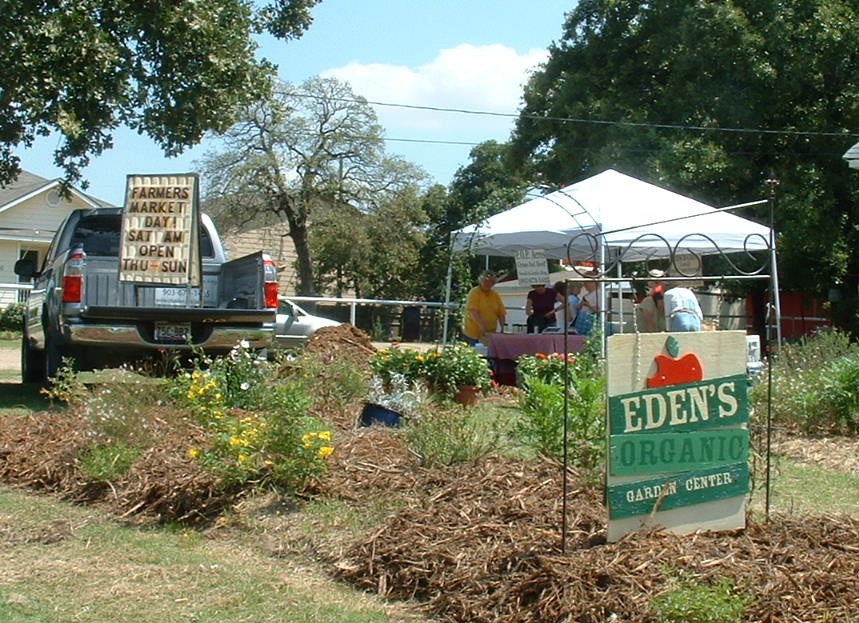
So, when I moved the shop down to Balch Springs and nearly lost my shirt doing so, I decided to invite organic, local, at the time, TOFGA (Texas Organic Farmers and Gardeners Association) farmers and ranchers to sell their wares at a once a month, old fashioned, “Market Day” I’d host on the shop grounds. It was a bit self-serving and at the same time, community serving, as I'd learned first hand what little access to really fresh, much less organic, produce there was to a person without their own transportation or with low income. I couldn't qualify for SNAP, but those who did, would be able to use it here for produce and vegetable/fruit plants and seeds.

I had also heard rumblings from farmers and ranchers of TOFGA that the big market wasn’t always a fair playing field for them because of the price gauging by non-producers that re-sold product that was often inferior. So I wanted also, to create that level playing field for these people who I’d come to know as hard-working folks just trying to scratch out a living while feeding the public safe to eat, nutritious and tasteful food. 

I wanted to create a bit of a utopia I guess.

A place where the public knew the food they’d buy was safe to eat, because I knew, or got to know, the producers and the methods they practiced; and, the producers knew they’d get a fair shot at selling their product because I’d not allow a 2nds and surplus dumping ground and had worked to cultivate a public that appreciated the value and the slightly higher cost sometimes associated with small, organic growing operations.  

The Market Day events grew pretty quickly at first. I was the only one in the DFW area who could claim to be an all farmers/ranchers and all “clean” or certified organic farmer’s market. I believe I still am the sole market that can make that claim. And at the time, I was one of only 2 or 3 other local markets.


The popularity of the theory of this kind of market has grown. The market’s attendance by both farmers and customers, has suffered, however.  In part, the influx of so many communities hosting their own “farmer’s markets”, and the recent overhaul of the big downtown market, means farmers have had to focus on higher traffic markets and people typically want to stay close to home if they can. 

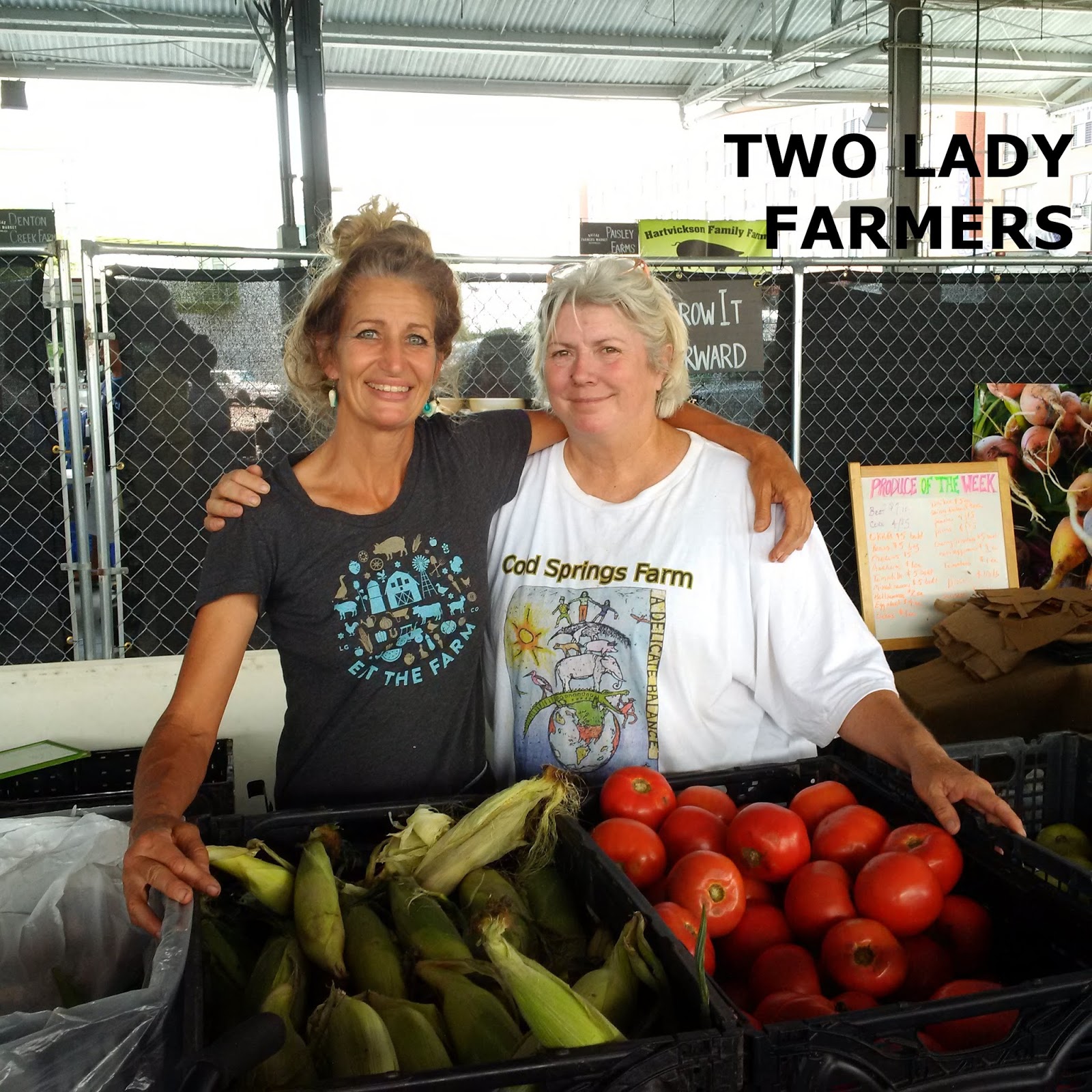
Many of us had high hopes for the downtown market’s facelift because we knew many of the people involved had righteous intentions. They wanted to fairly represent local, in-season foods grown on local TX farms and ranches and small batch artisans.  I don’t know the exact number of miles they determined “local” to be, but nothing was being flown in, I think I can safely say. OK and LA are neighboring states, not that far from our DFW area, and in many cases, closer than some of our south TX farmers. I was not at all opposed to truck farmers coming in, especially with things our local farmers didn’t supply.  I even started joining fellow lady farmer Beverly Thomas from Cold Springs Farm and came to be known as Two Lady Farmers at the DFM on Sundays.

However, as is also making the local news lately, many of the people responsible for those changes at the downtown market, have themselves changed out and many of the standards have gone away with them. “Meeting customer demand”, is what we’re told. It seems a large enough consensus of the DFM shopping public either doesn’t understand local, in-season shopping, or just doesn’t care to have a market that abides by the principals of a producers-only, in-season, local food farmer’s market. 
  
I, on the other hand, do understand, and care. And I know many, many of you who do also. I hear from you almost daily. I don’t see nearly enough of you, however, at the little community market twice a month that I have been struggling to keep running for the past 10 years. 

I know, many now have to work weekends, or families have various activities planned for their kids on Saturday mornings. Sadly, they don’t seem to include a trip to their local urban farm to shop at the market. (I was a kid, I hated going grocery shopping, I get it.) 

But many of you do, apparently, shop at these ever increasingly popular “faux” farmers markets or there wouldn’t be so many of them popping up across the DFW area. And the one’s I’m talking about are not featuring local, small batch, or in-season, much less, organically grown, produce or products. You might stumble upon one that has some gardeners there – and hooray for those few. But many are, as one fellow grower called them, “farmerless farmer’s markets” 

I need your help understanding what it will take to bring this little market that could back to full steam.

Because now more than ever, perhaps, as our certified organic label takes yet another beating, and more and more farmers leave it behind, you probably want a place where you can go that you can trust the faces behind those tables and the food.

I’m honored that so many of you have come to trust me to vet farmers and ranchers that sell here. That the food coming here to be sold is safe to consume, is very important to me. I've uninvited or not included a handful of farmers or products that I felt had less than righteous intentions or didn't meet the standards for the kind of products I wanted to carry. And I've also mentored a few previously conventional growers, over to the "non-conventional" ways followed by myself and many of my colleagues. We can always improve, and I will always strive to do better.

I need your help when it comes to making this market more of what you want it to be, so it can become the vibrant Saturday morning local community food hub it used to be. 

While I intend to keep the focus on fresh produce and other raw ingredients like grass-fed meats, wild caught fish (from fishermen I have come to know and trust), and small batch artisan value-added foods, I also want to grow the market to include some activities that enrich the experience. 

I’m in conversation with chefs about providing cooking demonstrations and on farm meals. We can bring back the food competitions like our chili cook off, salsa/pesto challenge, ice cream crank off, farm to screen events and kids’ activities, too. 

But coordinating these things takes legwork. And the two hours or so it will take me to type, edit and produce this piece is easy to do today since the animals are fed and there’s a cold steady November rain outside, and I’ve run out of vacuum cleaner bags so I can’t do anything much else right now anyway. 

But this needed to be said whether it rained or not. I’m just glad the weather gave me the opportunity to give it so much thought. Even though it made for a long read. Some things are worth taking the time to explain in a bit of a drawn out way. I think this is one of those things. There are a lot of moving parts to the local food movement. And they're not always pretty.  It's become a way of life for me and it's worth defending and explaining. If I need to take a morning to do so, I will.

I really enjoy hosting Market Day and have come to love growing food for people who really appreciate what I and so many others I know do for a living.

I saw a few thousand and met at least a hundred of those people, chefs and the general public alike, over the past weekend at the Chefs for Farmers marathon of events. “Tell me about your farm!” “I love what you’re doing!” “Thank you for doing what you do!” It was music to my ears and that I'm sure of all of the other farmers in attendance.  Want to make a farmer feel good? Tell him or her how much you appreciate their work. Thank her or him for harvesting in that cold November rain so you can have your CSA pick up at the regularly scheduled time so as not to inconvenience anyone’s schedule and risk them not-renewing their memberships. 

I need a few volunteers, at first anyway, to be able to consult with and explore the best way for Eden’s Market Day to move forward.

More people from out of state are moving here to N. Texas, and they have expectations for what comprises a “farmer’s market” because many of them came from cities that "get it". Many are wise to what many who don’t know any better, are not. And they don’t know what to do to find what they're missing. Some turn to home delivery options, I suppose, hoping they’re getting a better quality product and are willing to pay for the convenience. 

And many farmers are scrambling to save their businesses from this kind of green-washing competition. No, most of those point and click national companies, and even a few local ones, do NOT get most of what you buy from them from local, (not local to YOU anyway) farms. There are some exceptions and I’ve known a farmer or two who have had sufficient quantities to sell to them sometimes. But then we have to ask ourselves about the carbon footprint all of that packaging leaves. I know, it’s always something. And once in awhile, buying this way may not make a big difference in the big picture. But you should at least know what you’re buying, right? And if it’s causing others or our planet to suffer, do we still want to support it just because it’s easier/cheaper? That’s up to you.

I want to help small farmers, and I want to provide a service to those of you who say no to that question. But I need your help in the way of participation, too. I’m a one woman show and I can not continue to be effective and do it all.
 
I need a few volunteers, at first anyway, to be able to consult with and explore the best way for Eden’s Market Day to move forward. 
Do we keep it a private market and look for funding sources to run it? Or do we take the big 501C3 plunge? That costs money and requires paperwork upkeep, etc. It certainly opens the door to lots of funding sources, but that, too, comes at a cost. 

How do we reach out to our local communities here in southeast Dallas County? We have a private bus service that runs 6 days a week now, so transportation for those without their own is better. But we still  need to communicate to everyone the value of making the trip and the best way I know to do that is to bring them right to the source.

Help me help you. My ears are open and I check email often. It gets crammed up with spam frequently, so be patient if you don’t hear back from me right way. (you can help me sort through it by having a clearly stated SUBJECT line.) 

I firmly believe, that people who participate in their food’s journey, choose better and that those involved in a project are more likely to support it. It’s possible that the past 10 years out here on my farm have left me out of some loop of society that would cause my thinking and beliefs to be mistaken, but prove me wrong, or please, help me engage people in what we're all pretty passionate about. 

What is the value of a small, urban farm? One that you can pretty easily take your kids to, every week or every other week, for free, and where they, and you, can experience small livestock, food growing in the ground, and food being harvested in real time, the fresh aroma of freshly harvested foods and the peace of mind of knowing where at least some of the food on your plate comes from? 

Is it worth a few hours a month to help out? To possibly stand in for a farmer who can’t be in 2 places at once? To perhaps run out to a farm an hour away in your gas efficient auto, (unlike the '86 F150 I drive), to pick up some boxes of goodies they want to sell, but have to get the next seasons’ crops in the ground because the timing is critical? 

If you can answer yes, that the value is worth doing any of these things, then please, shoot me an email, give me a call, or set up an appointment to meet with me. 

People in southeast Dallas county and all over the metroplex deserve a market that they can count on to bring them Real Food, Grown with Integrity. Let’s do this!   

And if you’re reading this but not in the DFW area, please, go ask your local, REAL farmer’s market if you can help them. Or, see if a local organic farmer in your area can use your help getting their produce to the people. 

Together, we can do better for the good of everyone. Whether the USDA wants to help or not. 


Marie Eat Your Food - Naturally!